

Agents

Agents that run your revenue motion end to end.

Taizen agents read every call, update your CRM, brief your reps, and flag the deals about to slip. No engineering, no prompt library to maintain, nothing new for reps to learn.

GuildAdevinta
CRM hygiene

Auto CRM Update · When a call ends

Reads the transcript and writes the record. MEDDPICC fields, next steps with owners, and the close date moved with the reason the buyer gave. Every value links back to the minute of the call it came from.

Notion post-callAuto CRM UpdateShare+28m ago97,709 credits

Salesforce updated. 6 fields changed on Notion, and the deal owner notified.

Working session: Notion

33 minute call · 4 participants · 2 sources

What changed
Close date
31 Mar21 Aprprocurement queue runs four weeks and has not started
Stage
DiscoveryProposalpricing shared and not objected to
MEDDPICC
3 of 75 of 7economic buyer named, champion confirmed
Next step
noneSecurity reviewowner Dana Whitfield, no date agreed yet

“Procurement takes four weeks and we have not started it yet. I would rather move the date than miss it.”Priya Raman, 24 minutes into the call

Also done
  • Posted the summary to the deal owner in Slack
  • Flagged the close date change for forecast review
Salesforce2 sourcesClaude Sonnet 512 steps
Suggested next stepsDraft follow-up emailBrief the deal ownerReview close date
Ask anythingCreate agentClaude Sonnet 5
Meeting readiness

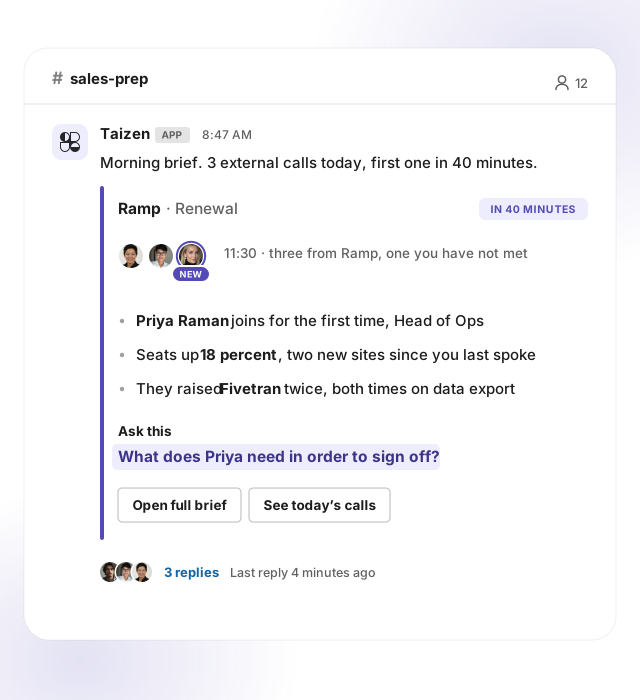
Meeting Prep · Weekday mornings

Builds a brief before every external call. Who is new in the room, what has changed since you last spoke, the competitors they have raised before, and the one question this stage turns on.

A meeting brief for the next external call: who is new in the room, what changed, which competitor has come up, and the question the stage turns on.
Re-engagement

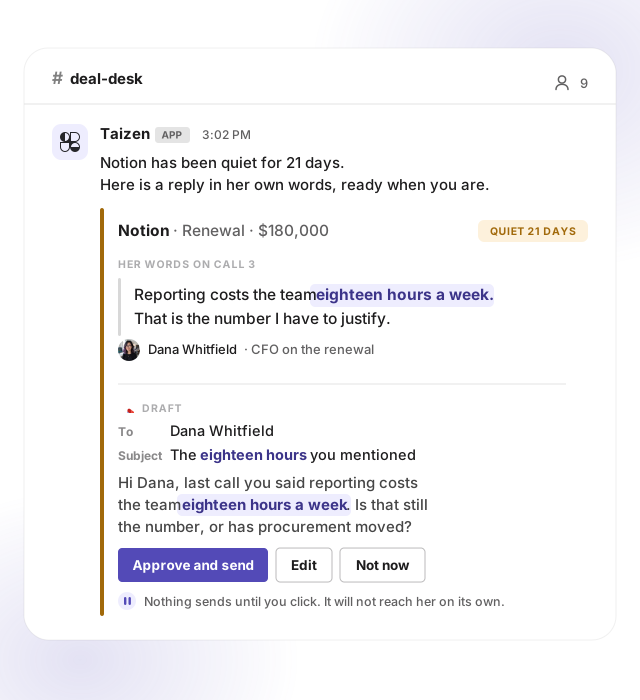
Stalled Deal Nudge · When a deal goes quiet for 14 days

Drafts the re-engagement email in the buyer's own words from the last call, then stops. It sits with the rep until they approve or edit it. Nothing reaches the buyer on its own.

A re-engagement email drafted from the buyer's own words on the last call, waiting on the rep to approve or edit it, with nothing sent.
Pipeline risk

Deal Intelligence · Weekly

Reviews every open deal and ranks the ones going quiet by what they would cost you. Single-threaded, no next step agreed, close date moved twice, an objection nobody answered. Each flag cites the call it came from.

Weekly sweepDeal IntelligenceShare+22h ago97,709 credits

Scanned 31 open deals. Seven need attention before the forecast call.

At risk$430,000across the seven flagged
Flagged7
of 31 scanned
No next step3
of 31 scanned

Ranked by what it would cost you

DealValueStageQuietSignal
Notion$180,000Negotiation21 daysOne contact across 6 calls. No exec has ever joined.
Ramp$95,000Proposal14 daysClose date moved twice. No next step agreed on either call.
Linear$60,000Discovery30 daysPricing objection raised 3 calls ago and never answered.
Vercel$45,000Proposal18 daysChampion left the company. Nobody has been re-engaged.
#deal-desk31 deals scannedClaude Opus 5
Ask anythingCreate agentClaude Sonnet 5

Works with the stack you already have.

Agents read from and write to the tools your team already uses.
HubSpotSalesforceSlackGongFirefliestl;dvNotionAttioGranolaGoogle CalendarGainsightOutreachGoogle DriveSalesloftGmailHighspotClariSharePointAmplitudeG2TypeformCapterraSurveyMonkey
FAQ

Frequently asked questions

Work that runs without anyone asking for it. It starts on a schedule or when something happens, uses your calls and CRM as context, and delivers where your team already works.

Connections are OAuth and take a few minutes. Most teams have their first agent live the same day, usually the CRM update, because it removes work reps are doing by hand right now.

No. You describe the agent in plain language and the trigger, job and destination fill in as you talk. Or start from a prebuilt agent and change the scope and the channel.

Your calls and transcripts, your CRM companies, contacts and deals, your documents, past buyer interviews, and the public web. Everything is scoped to your workspace.

You decide when you connect it. Read-only for analysis, or write scopes for fields, notes, next steps and close dates. With read-only credentials a run tells you it could not write rather than pretending it did.

An agent delivers only where you point it, so a private channel with two or three reviewers is a real boundary, not a convention. Most teams run a new agent that way for a week before repointing it at the team.

You can see what it saw. Every run keeps its inputs, the steps it took, which tool it chose and what it produced, so the fix is usually one line in the instructions rather than a support ticket.

You pick per agent. Claude Opus 5 and GPT-5.6 for reasoning-heavy work like deal review and competitive analysis, Claude Sonnet 5 for high-volume mechanical work like post-call CRM updates. Every run shows its cost.

Yes, through MCP. Connect any MCP server over OAuth and your agents can use it. No custom integration work on your side.

Gong tells you what happened on the call. Agents do the next thing: write the CRM, send the brief, flag the deal, queue the interview. Taizen reads from Gong rather than replacing it.

No. Agents do the work between calls, which is the part nobody enjoys and everyone skips when the quarter gets busy. Every flag comes with the call it came from so the rep can disagree with it.

Start with one agent.

Pick the task your reps hate most. It runs on the CRM and calls you already have.