Agents for revenue teams.

Taizen deploys AI agents that run your deal admin, coach your reps, and interview the buyers you lost. Less admin, faster ramp, higher win rate.
Trusted By Leaders At
SpotifyZendeskGuildAdevintaBoltDeel

What changes when agents do the work.

One platform running across sales, enablement, and RevOps.

2x
faster rep ramp
10%+
higher win rates
6 hrs
saved per rep, every week
Agents that do the work, not just the analysis

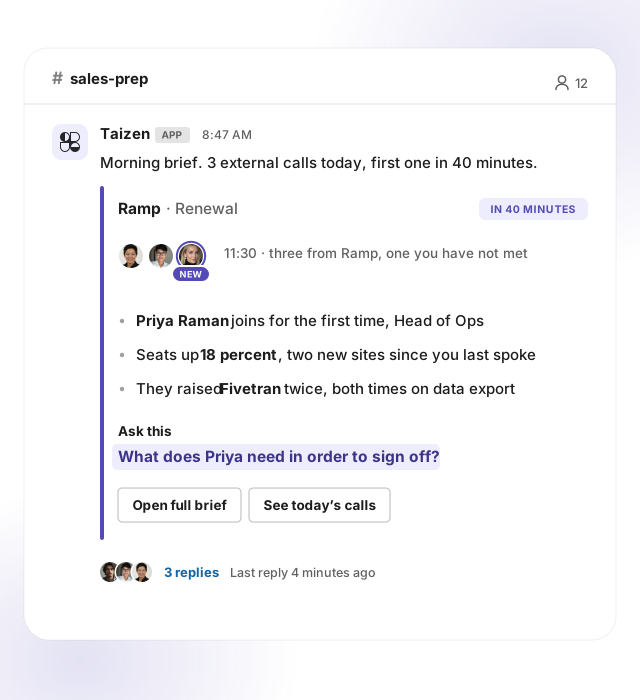
Auto CRM Update, Meeting Prep, Deal Intelligence, and CI monitoring. Every agent runs on a schedule, after a call, or on demand, and delivers to Slack, email, or your CRM.

Reps practice the meeting before they walk into it

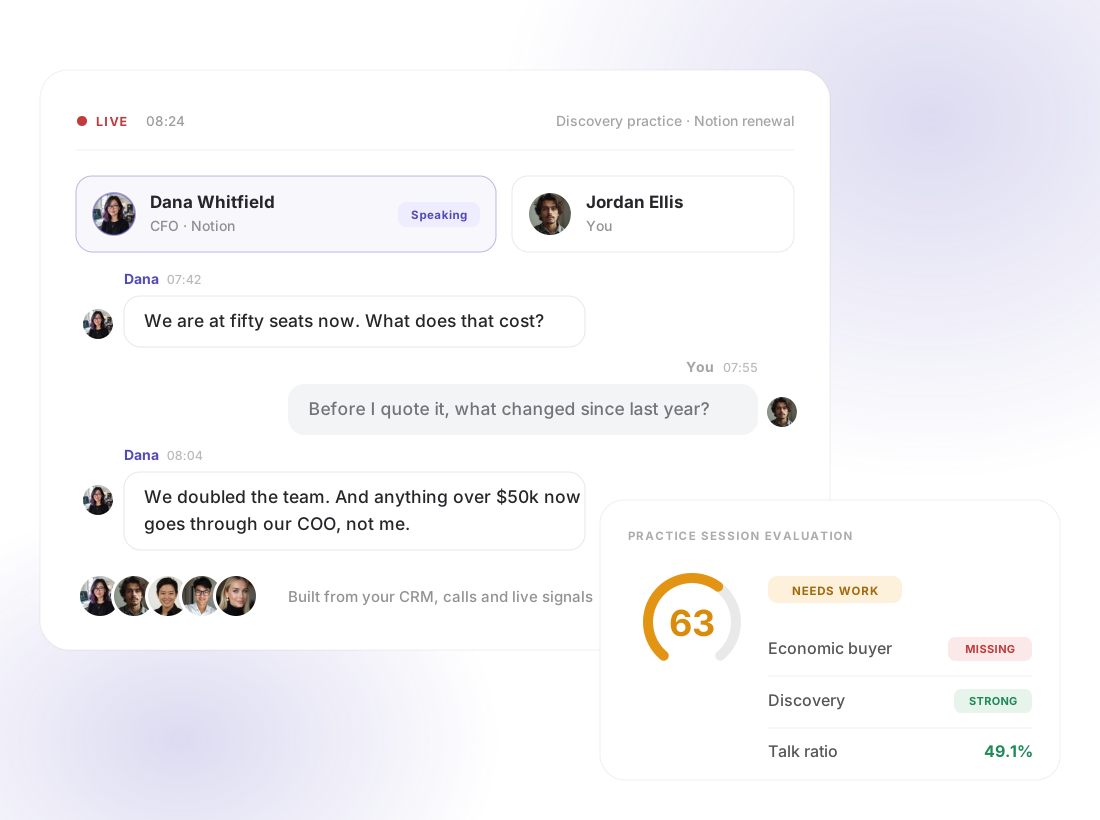
Taizen builds the buyer from your CRM, your call history, and live signals about their company, then runs a voice roleplay and scores it. Training plans escalate from friendly to hostile with pass gates at each stage.

Ask the buyer who chose someone else, and the rep who lost

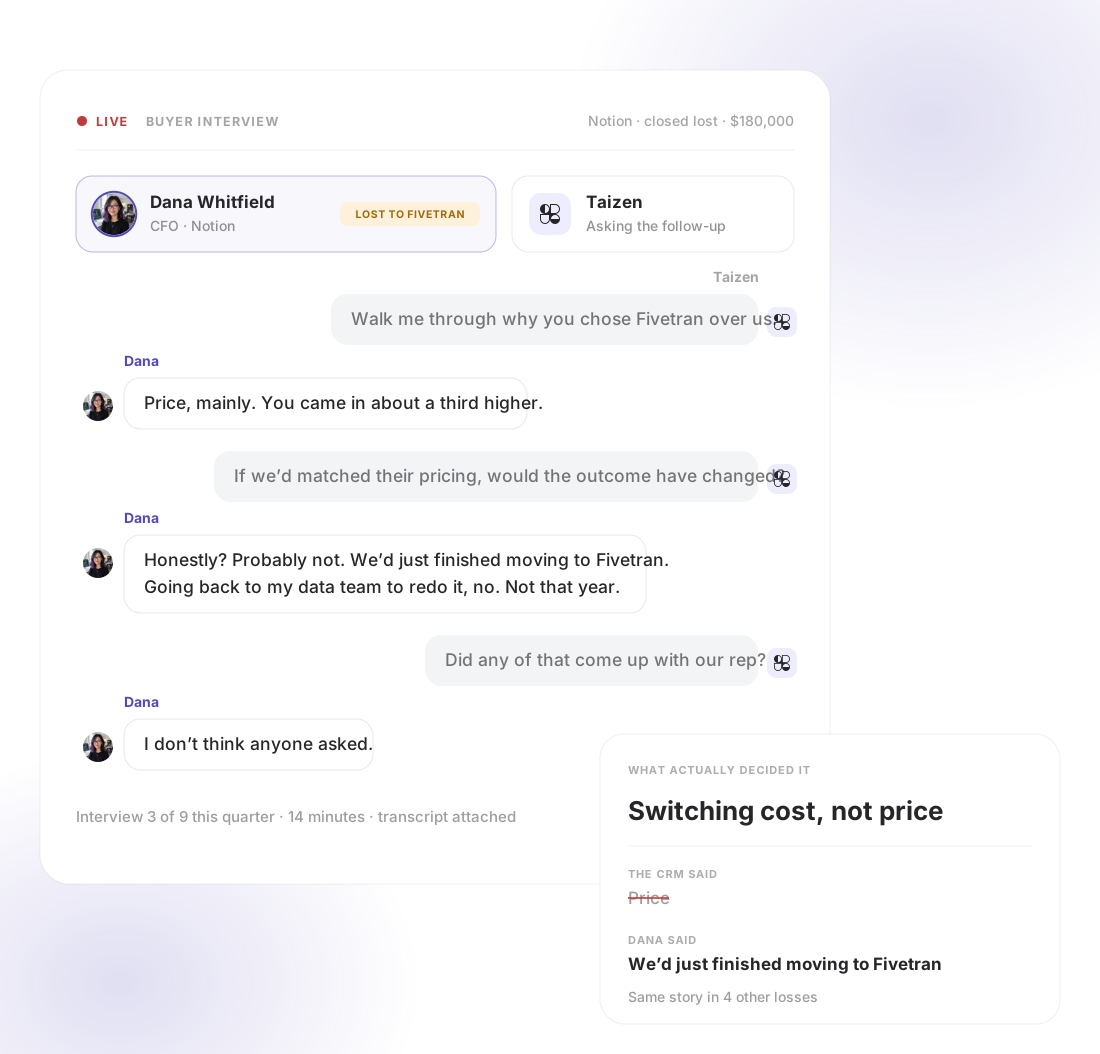
Voice AI interviews both sides of every closed deal, plus sellers who used to carry a competitor's product, at a volume a quarterly program cannot reach. Where the buyer's account and the seller's diverge is where your positioning is breaking.

Practice and real calls, scored the same way.

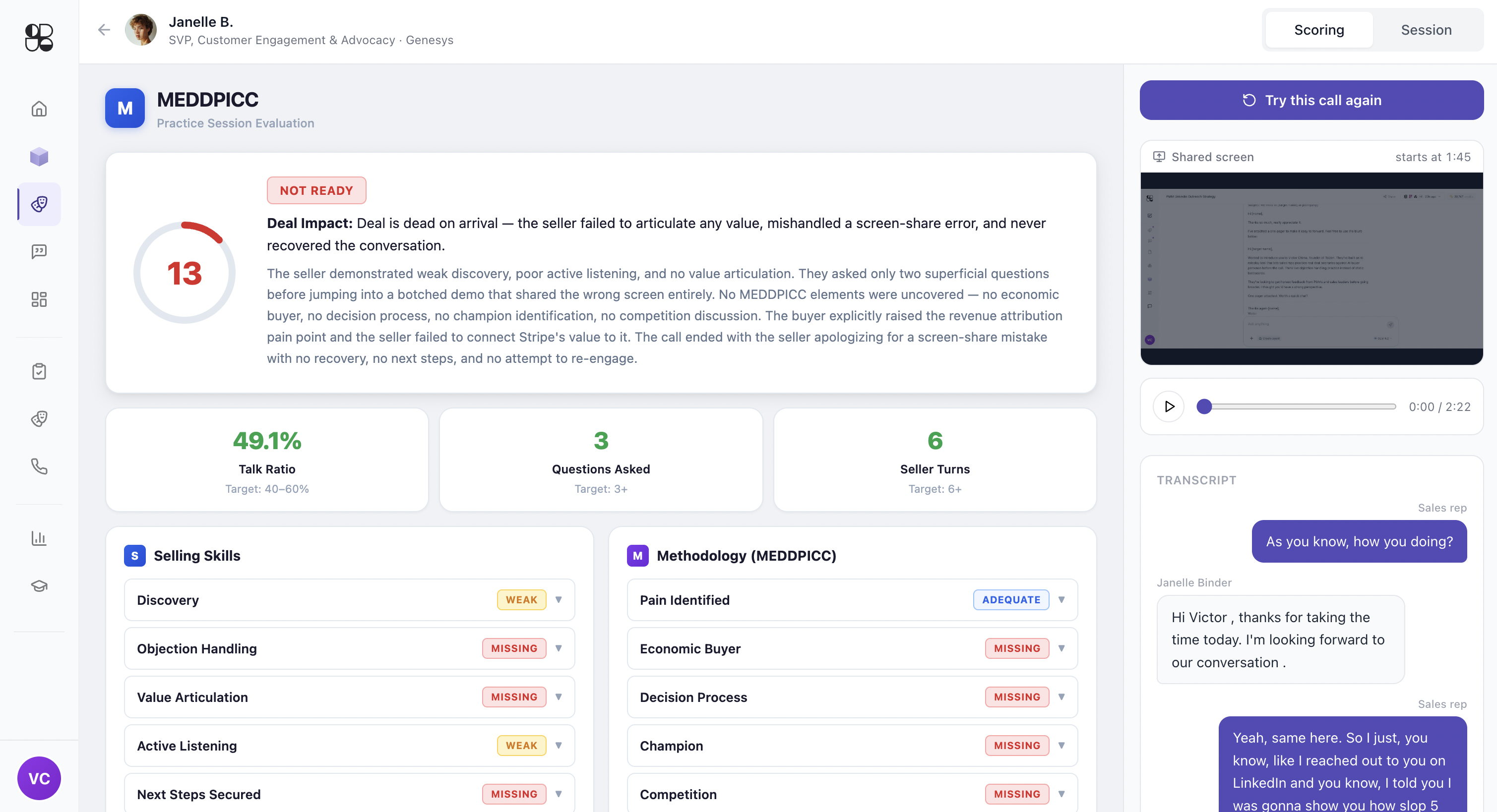
Taizen scores roleplay calls and real calls on one rubric, so you can see whether the practice changed anything. Eight frameworks ship in the box, including MEDDPICC, Challenger, and SPIN, and you can build your own. Every rating cites the exact moment in the transcript it came from.
Scored roleplay session showing a low score and Not Ready state
Scored session
Every session scored against your rubric, with evidence for each rating. This one failed.
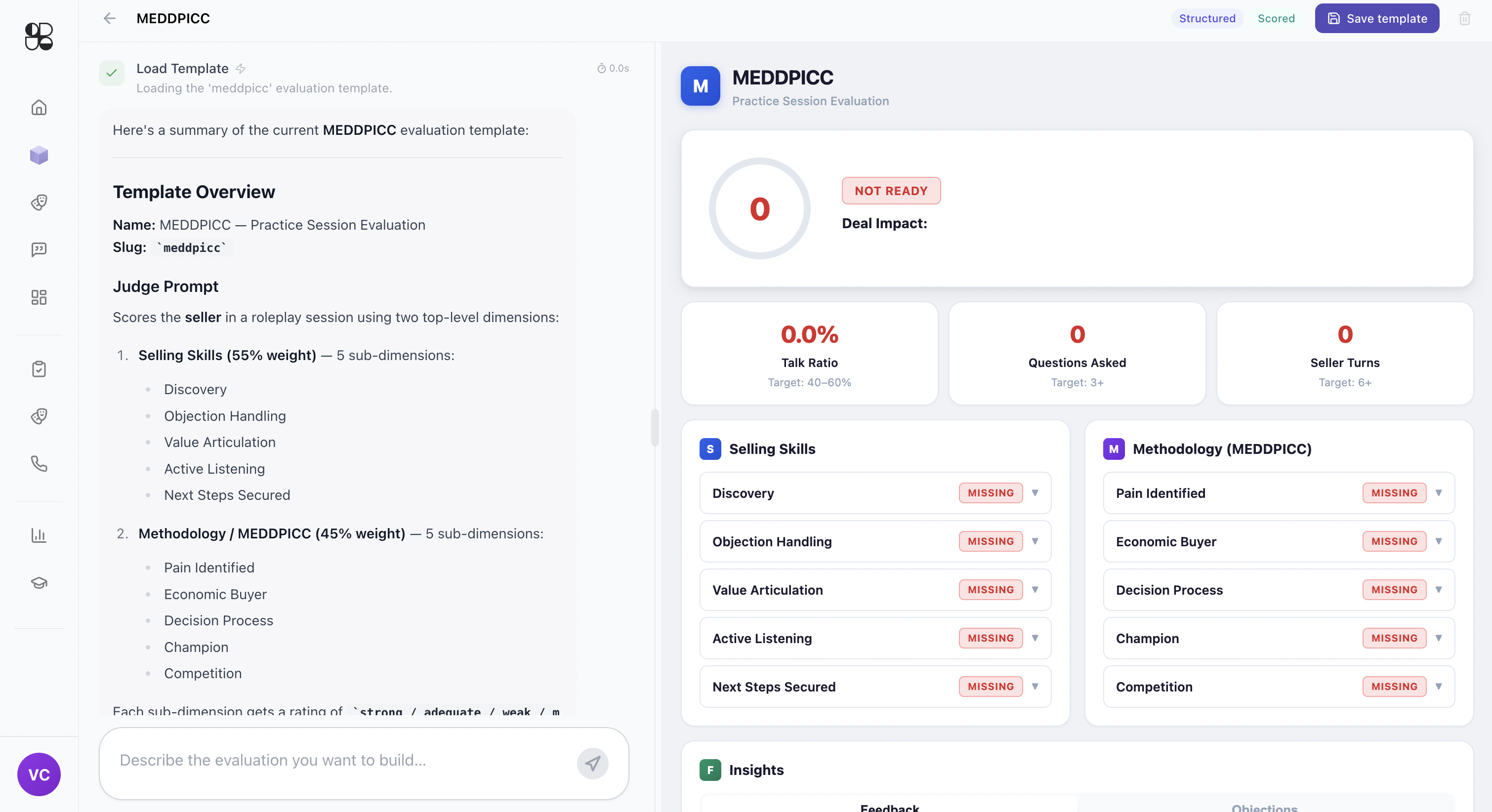
Scorecard builder with the MEDDPICC template loaded, showing its dimensions and weights beside a describe-your-evaluation prompt
Scorecard builder
Describe the rubric you want, or start from MEDDPICC, Challenger, or SPIN.

One platform, every GTM role.

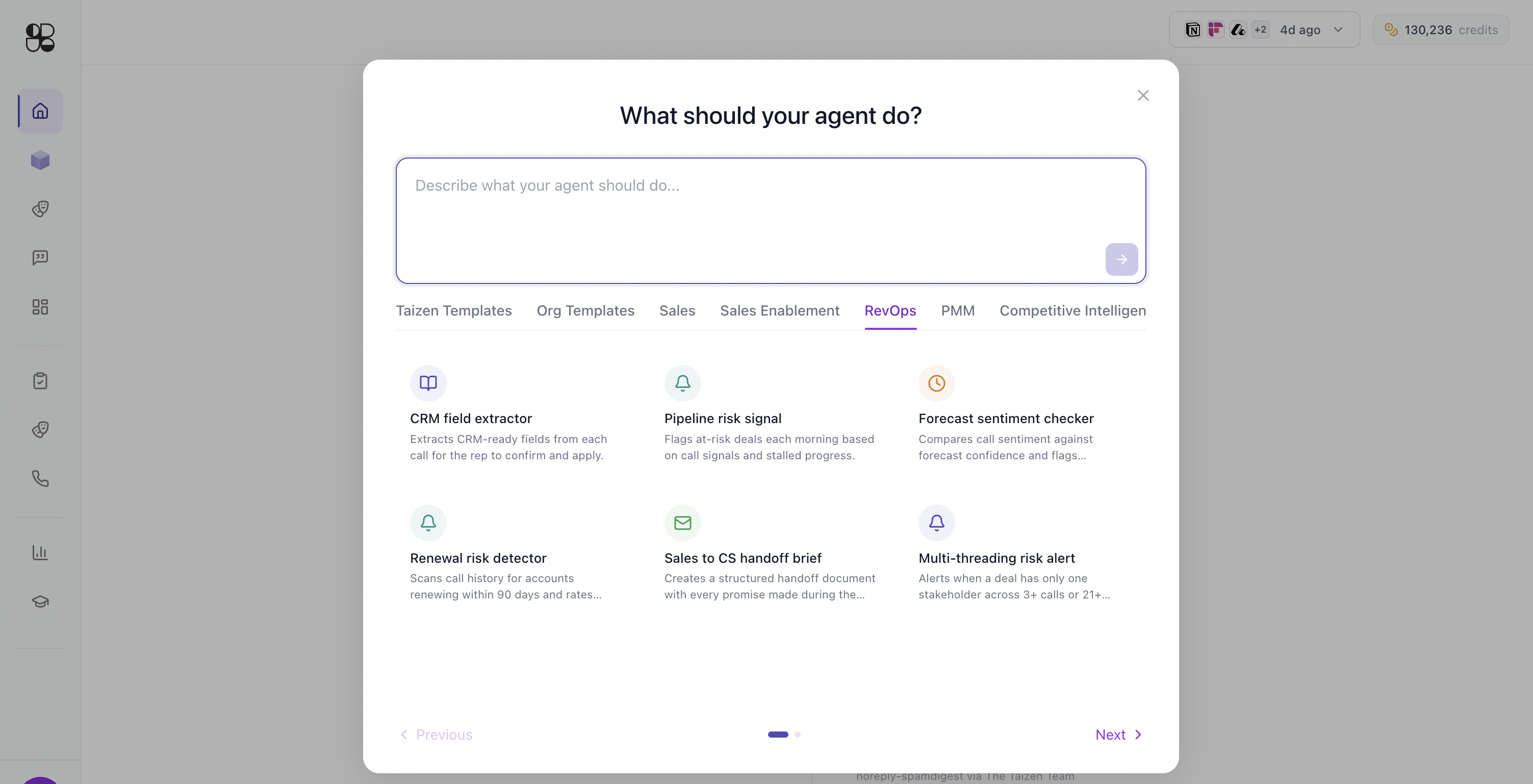
Sales, Enablement, RevOps, PMM, and Competitive Intelligence each get agents built for their own work.
Template modal showing the Sales, Sales Enablement, RevOps, PMM, and Competitive Intelligence tabs

Works with the stack you already have.

Agents read from and write to the tools your team already uses.
HubSpotSalesforceSlackGongFirefliestl;dvNotionAttioGranolaGoogle CalendarGainsightOutreachGoogle DriveSalesloftGmailHighspotClariSharePointAmplitudeG2TypeformCapterraSurveyMonkey
FAQ

Frequently asked questions

Platform

Claude and ChatGPT wait for you to ask. Taizen doesn't. Our agents trigger on events: a call ends, a deal is marked lost, a competitor changes their pricing page. They already hold your CRM records, call history, and past buyer interviews as context, and they deliver the result into Slack, your CRM, or a rep's inbox without anyone opening a chat window. We run on frontier models, including Claude, so the reasoning quality is the same. What we add is the trigger, the context, the workflow, and the delivery. You can prompt ChatGPT to write a battlecard. You can't prompt it to notice a competitor moved on Tuesday, rewrite the objection section, and have four reps drilled on it by Friday. And if you're wondering whether you could assemble this yourself with a few MCP connectors: some of it, yes. What you'd be building is the part that isn't the model, which is scheduling, approval gates, a voice stack that handles interruptions, consistent scoring with evidence, and an audit trail.

No. It runs the operational work: interviews, transcripts, battlecard maintenance, CRM hygiene, and coaching prep. Your PMM and RevOps leads keep the parts that need judgment, which is positioning, narrative, and deciding what to do about a competitor. In practice the strategic part of the role gets more room, not less.

SOC 2 Type II and ISO 27001 certified. Your data stays in your own region and isn't used to train models. Interview transcripts are encrypted; you can delete any interview at any time, and deletions cascade to all derived artifacts: battlecards, roleplays, and coaching notes.

Over 100, across call intelligence, CRM, sales engagement, and workspace tools. Connect a call source and your CRM, set your ICP rules, and the agents handle the rest.

Agents

A concrete example. Auto CRM Update runs after every call: it writes the deal fields, logs next steps, updates the close date with the reason captured from the conversation, and flags anything that contradicts what the rep said last week. Meeting Prep runs at 7am on weekdays, scans the calendar for external calls, pulls email and call history plus company research, and delivers a brief. Each agent has a trigger, a set of steps, and a delivery destination. You can build your own by describing what you want in plain language, or start from a template. Templates are organized by team, so Sales, Enablement, RevOps, PMM, and Competitive Intelligence each have a set built for their own work.

Only if you want it to. Every agent output can route through an approval queue before it goes anywhere, and you decide which agents run unattended and which need a person. Most teams start with everything gated and open up the low-risk ones once they trust the output. Every run is logged with its inputs, steps, and output, so when an agent gets something wrong you can see what it saw and why.

Gong and Clari tell you what happened on a call. Taizen does something about it: writes the CRM fields, books the interview, updates the battlecard, and drills the rep. They're conversation intelligence, we're the layer that acts. Most of our customers keep Gong and pipe the call data straight into Taizen.

AI Roleplay

An AI judge scores against a rubric you control, and every rating has to cite the exact moment in the transcript it came from, so you can check its reasoning rather than take a number on faith. It's built to be strict: sessions fail, and a failing score with evidence is more useful to a manager than a generous one. Eight frameworks ship in the box, including MEDDPICC, Challenger, and SPIN, and you can describe your own.

Both, on the same rubric. That's the point. Practice scores and real-call scores sit side by side, so you can see whether the drilling changed how the rep actually sells rather than just how they perform in a mock.

Training plans, rather than an open library nobody opens. A plan is a sequence of scenarios escalating from a friendly buyer to a hostile one, with a passing score required at each stage before the next unlocks, and a certification step at the end. Managers see who has passed what, so it becomes part of ramp rather than an optional tool. The voice is live with interruption handling, so the buyer talks over the rep and goes off script the way a real one does. Fastest way to judge it is to try it yourself.

Win/Loss Interviews

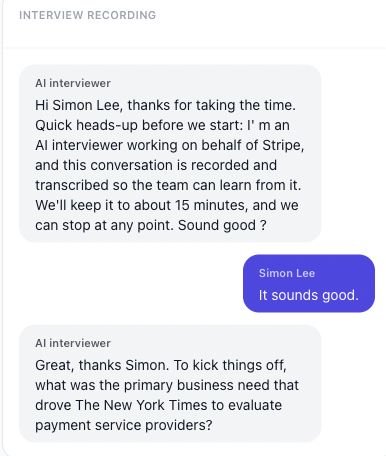
The agent reaches out by email or LinkedIn in your tone, books a short call, and runs the interview by voice, asking follow-ups and probing past the first answer for the real reason rather than the polite one. Buyers are often more candid with it than with the salesperson who just lost the deal, because there's nothing to manage. It says it's an AI in its first sentence, every time. Some buyers prefer to answer in writing and the agent handles that instead, and if someone wants a human, your team can take over at any point.

Yes. Alongside the buyer and your own rep, Taizen interviews sellers who used to carry a competitor's product: how they were trained to position against you, which objections they were told to expect, where they were coached to say you were weak, and what made their deals slip. It's the same voice interview, and it lands in the same places, which is the battlecard, a roleplay drill, and the competitive brief. We ask only about their own experience of selling and positioning, and we don't ask anyone for confidential material from a former employer.

Yes, and this is the part most teams don't expect to matter. Taizen interviews the rep who lost the deal alongside the buyer, then puts the two accounts next to each other. The gap between what your rep believes lost the deal and what the buyer says lost it is usually the most useful output of the whole program, and it's something a CRM loss-reason dropdown can never surface. We interview won deals too, which tells you which part of the pitch actually landed.

Traditional programs run quarterly, cost a project fee, and end with a slide deck. Taizen runs continuously and ends with something a rep can use: a refreshed battlecard, a roleplay drill built from that buyer's actual objections, and a coaching note for the person who lost the deal. Klue and Crayon are a different thing again. They watch competitors from the outside, meaning their website, pricing, and reviews. We start inside your own deals, with what the buyer who chose them actually told us. Competitor monitoring tells you what changed. A buyer interview tells you why it cost you the deal.

Competitive Intelligence

It runs on a schedule against a watchlist of your named competitors and tracks the public surface that moves deals: pricing and packaging pages, website and messaging changes, news, LinkedIn, and job postings. Every run diffs against the last one, so what lands is what changed since you last looked rather than a re-listing of everything. Hiring gets called out as its own signal, because a cluster of GTM roles or a new location tells you where a competitor is investing before they announce it.

Two places, and the second is the one most tools don't have. The first is monitoring competitors from the outside, the same public surface everyone can see. The second is what people told us directly: buyers who evaluated you and chose someone else, your own reps who lost those deals, and sellers who used to carry the competitor's product. Public monitoring tells you what a competitor changed. Interviews tell you why it cost you a deal, which objection actually landed, and what their reps are coached to say about you.

Agents for revenue teams.